
Trench Digger
Trench Digger: Complete Guide to Uses, Types, Performance, and Applications
A trench digger is a powerful piece of equipment designed to cut narrow, precise trenches in soil, dirt, clay, and even rocky ground. Trench diggers are essential tools in construction, landscaping, utilities, plumbing, irrigation, and electrical installations. Their ability to excavate clean, uniform trenches quickly makes them far more efficient than manual digging or general-purpose excavation equipment.
This comprehensive guide explains what a trench digger is, how it works, the different types available, common applications, cutting mechanisms, performance considerations, safety practices, and answers to the most frequently asked questions about trench diggers.
What Is a Trench Digger?
A trench digger is a machine built specifically to excavate long, narrow trenches with consistent depth and width. Unlike backhoes or excavators that remove large volumes of material, trench diggers focus on precision, making them ideal for laying pipes, conduit, cables, drainage systems, and irrigation lines.
Most trench diggers use a rotating chain with cutting teeth or a digging wheel to remove soil efficiently while depositing spoil neatly alongside the trench.
How a Trench Digger Works
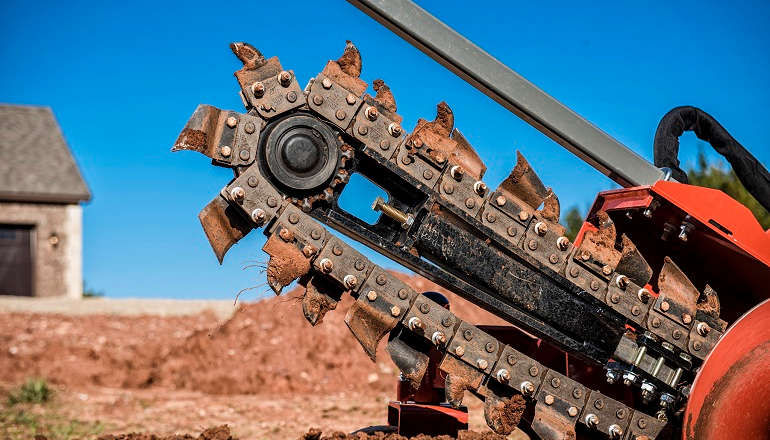
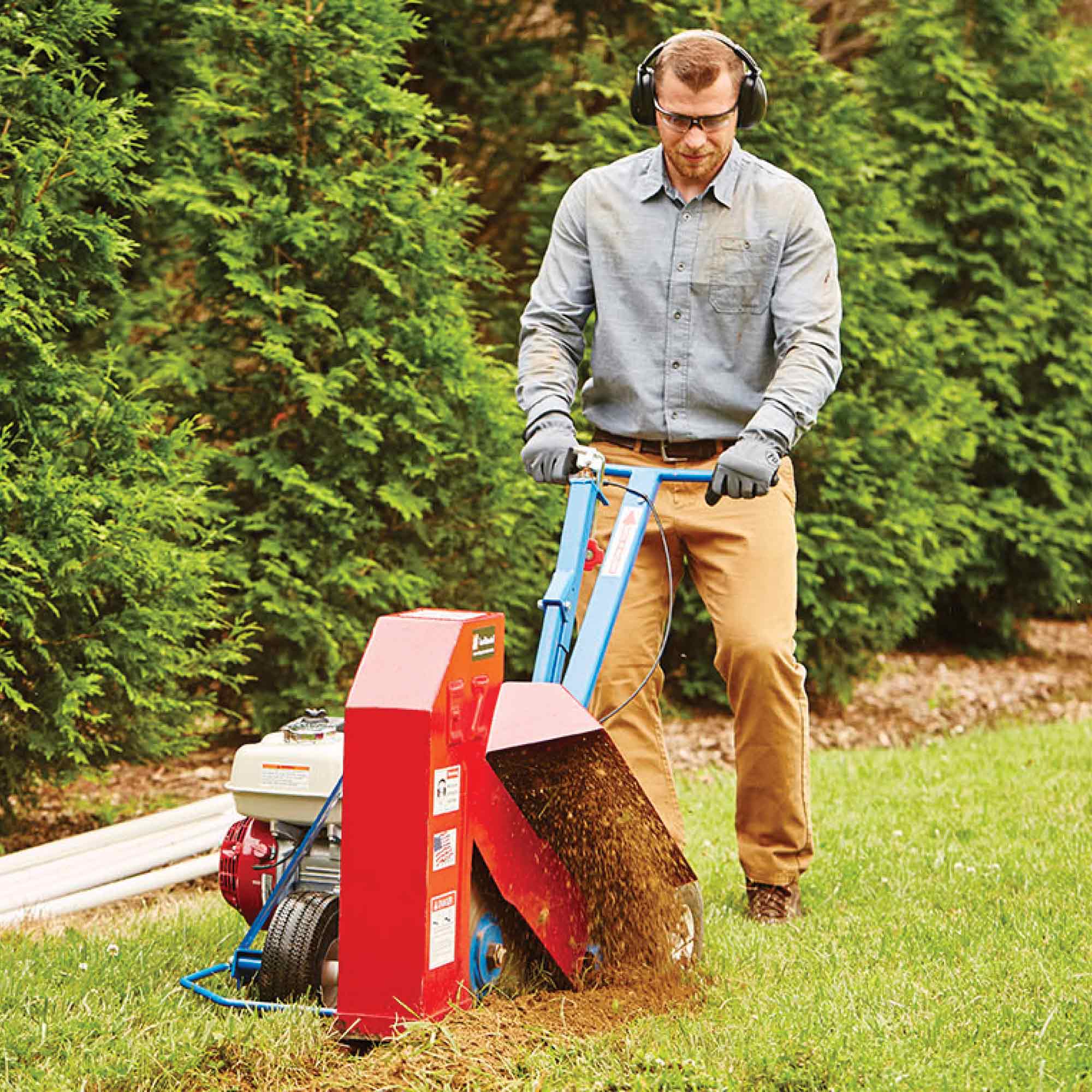

A trench digger operates by driving a cutting mechanism into the ground while moving forward. As the machine advances, soil is excavated and lifted out of the trench, leaving behind a clean channel.
Core components include:
-
Engine or motor (gas, diesel, or electric)
-
Digging chain or wheel
-
Cutting teeth or blades
-
Depth and width controls
-
Drive system (wheels or tracks)
The design allows consistent trench depth and width across long distances with minimal manual cleanup.
Types of Trench Diggers
Walk-Behind Trench Diggers
Walk-behind trench diggers are compact and maneuverable, making them ideal for residential and light commercial projects. They are commonly used for irrigation lines, small plumbing jobs, and landscape lighting.
Best for:
-
Homeowners and contractors
-
Tight access areas
-
Shallow to medium-depth trenches
Ride-On Trench Diggers
Ride-on models allow the operator to sit on the machine, improving comfort and productivity on larger jobs. These trench diggers offer greater power and deeper trenching capability.
Best for:
-
Commercial installations
-
Long trench runs
-
Medium to heavy-duty work
Mini Trench Diggers
Mini trench diggers are designed for confined spaces and indoor or urban environments. Their compact footprint allows access through gates and narrow pathways.
Best for:
-
Urban construction
-
Utility repairs
-
Landscaping projects
Attachment Trench Diggers
These trench diggers mount onto skid steers, compact tractors, or loaders. They offer flexibility for operators who already own compatible equipment.
Best for:
-
Multi-purpose job sites
-
Contractors with existing machinery
Common Applications of a Trench Digger
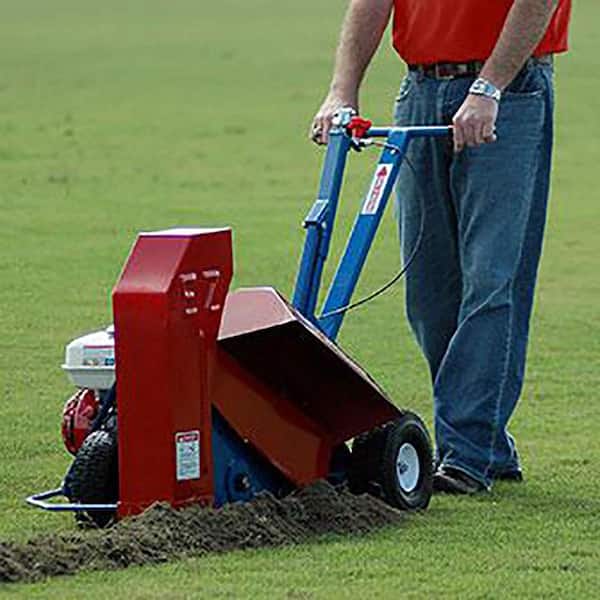


Trench diggers are used across many industries due to their efficiency and precision.
Utility Installation
Used to dig trenches for electrical conduit, fiber optic cable, gas lines, and water lines.
Plumbing and Drainage
Ideal for sewer lines, drainage systems, and water supply piping.
Irrigation Systems
Widely used to install sprinkler lines and drip irrigation tubing in residential and commercial landscapes.
Landscaping Projects
Used for edging, drainage trenches, and landscape lighting installations.
Construction and Infrastructure
Common on job sites requiring consistent trench depth for foundations and footings.
Trench Digger Cutting Systems
Chain Trench Diggers
The most common design. A rotating chain with replaceable teeth cuts through soil efficiently and handles mixed ground conditions well.
Wheel Trench Diggers
Use a large rotating wheel with cutting teeth. These are often used for harder ground and rock.
Tooth Styles
Cutting teeth vary by soil type:
-
Cup teeth for soft soil
-
Shark teeth for clay
-
Carbide teeth for rock and frozen ground
Selecting the right teeth dramatically improves performance and reduces wear.
Trench Depth and Width Capabilities
Trench diggers are available in a wide range of trenching capacities.
Typical trench widths:
-
4 inches
-
6 inches
-
8 inches
-
12 inches
Typical trench depths:
-
12 inches
-
24 inches
-
36 inches
-
Up to 48 inches or more on heavy-duty models
The required depth and width depend on the application and local code requirements.
Popular Trench Digger Manufacturers
Several manufacturers are known for producing reliable, high-performance trench diggers:
-
Barreto – Known for durable hydraulic trench diggers
-
Ditch Witch – Industry leader in trenching solutions
-
Toro – Offers compact and user-friendly trench diggers
-
Vermeer – Heavy-duty trenchers for utility work
-
Bobcat – Trench digger attachments and compact machines
Each brand offers models designed for different soil conditions and workload demands.
Performance Factors That Matter
When choosing a trench digger, several factors directly impact productivity.
Engine Power
Higher horsepower allows deeper trenching and better performance in hard ground.
Ground Conditions
Soil composition, moisture, and rock content influence cutting speed and tooth selection.
Maneuverability
Compact designs improve access in tight spaces and reduce site disruption.
Spoil Management
Efficient spoil discharge keeps trenches clean and reduces manual labor.
Safety Considerations When Using a Trench Digger
Operating a trench digger involves moving parts, rotating chains, and underground hazards.
Key safety practices include:
-
Wearing protective eyewear and hearing protection
-
Keeping hands and feet clear of the trenching mechanism
-
Locating underground utilities before digging
-
Maintaining stable footing and machine control
-
Shutting down the machine before maintenance
Proper training and awareness significantly reduce the risk of injury.
Maintenance and Care
Routine maintenance extends the life of a trench digger and ensures consistent performance.
Maintenance tasks include:
-
Inspecting and replacing worn teeth
-
Lubricating moving components
-
Checking chain tension
-
Cleaning soil buildup after use
-
Inspecting belts, hoses, and hydraulic lines
Well-maintained trench diggers deliver faster trenching and lower operating costs.
Trench Digger vs Excavator
While both machines dig soil, they serve different purposes.
Trench digger advantages:
-
Faster for narrow trenches
-
Cleaner trench profiles
-
Less site disruption
-
More cost-effective for utility work
Excavators are better suited for large-volume excavation but lack trenching precision.
Trench Digger FAQs
What is a trench digger used for?
A trench digger is used to excavate narrow trenches for utilities, plumbing, irrigation, and drainage systems.
How deep can a trench digger dig?
Depending on the model, trench diggers can dig from 12 inches up to 48 inches or more.
Can a trench digger cut through rock?
Yes, with carbide or rock teeth, many trench diggers can cut through rocky soil.
Are trench diggers easy to operate?
Most models are user-friendly, though training is recommended for safe and efficient operation.
What is the difference between a trencher and a trench digger?
The terms are often used interchangeably; both refer to machines designed to dig trenches.
Can trench diggers be used on slopes?
Some models can operate on gentle slopes, but stability must always be considered.
Do trench diggers damage landscaping?
They are designed to minimize disruption compared to manual digging or excavators.
Is a trench digger better than digging by hand?
Yes. Trench diggers are significantly faster, more precise, and less physically demanding.
Why a Trench Digger Is an Essential Tool
A trench digger is one of the most efficient tools for any project requiring precise, repeatable trenching. Its ability to handle various soil conditions while maintaining clean trench profiles makes it indispensable for contractors, landscapers, and utility installers.
From residential irrigation systems to large-scale utility infrastructure, a trench digger delivers speed, accuracy, and consistency that manual methods and general excavation equipment simply cannot match.