
Sand Screed Tools
Sand Screed Tools: The Complete Guide to Leveling Sand for Pavers, Concrete, and Construction Projects
Sand screed tools are essential construction tools used to create perfectly level surfaces when working with sand, gravel, or similar base materials. These tools are widely used in landscaping, masonry, concrete preparation, and paver installation to ensure an even and stable base before laying materials such as bricks, stones, tiles, or concrete slabs.
A properly screeded sand base ensures long-term stability, prevents uneven settling, and improves the overall durability of the finished surface. Contractors, landscapers, and DIY builders rely on sand screed tools to achieve professional results in projects such as patios, walkways, driveways, and flooring installations.
This comprehensive guide explains what sand screed tools are, how they work, the different types available, and the best practices for using them effectively in construction and landscaping projects.
What Are Sand Screed Tools?
Sand screed tools are leveling devices used to distribute and smooth sand to a consistent height. The screeding process removes excess material while filling low spots, creating a flat surface that is ready for installation of pavers, tiles, or other materials.
The term “screeding” refers to the act of dragging a straight edge or specialized tool across a surface to level it.
Sand screed tools help achieve:
-
Precise elevation control
-
Smooth and level sand bases
-
Proper drainage slopes
-
Consistent bedding thickness
Without proper screeding, installed pavers or stones may shift, sink, or become uneven over time.
Why Sand Screeding Is Important
Proper sand screeding plays a critical role in many construction and landscaping projects.
Creates a Level Base
A screeded sand surface ensures that pavers and stones sit evenly and securely.
Improves Structural Stability
A uniform sand layer distributes weight evenly and prevents localized settling.
Enhances Drainage
Correct screeding allows contractors to establish proper slopes for water runoff.
Reduces Installation Errors
A level sand bed simplifies paver placement and alignment.
These benefits make screeding one of the most important steps in paver and hardscape installation.
Types of Sand Screed Tools
Several types of tools are commonly used to screed sand depending on the project size and complexity.
Screed Bars


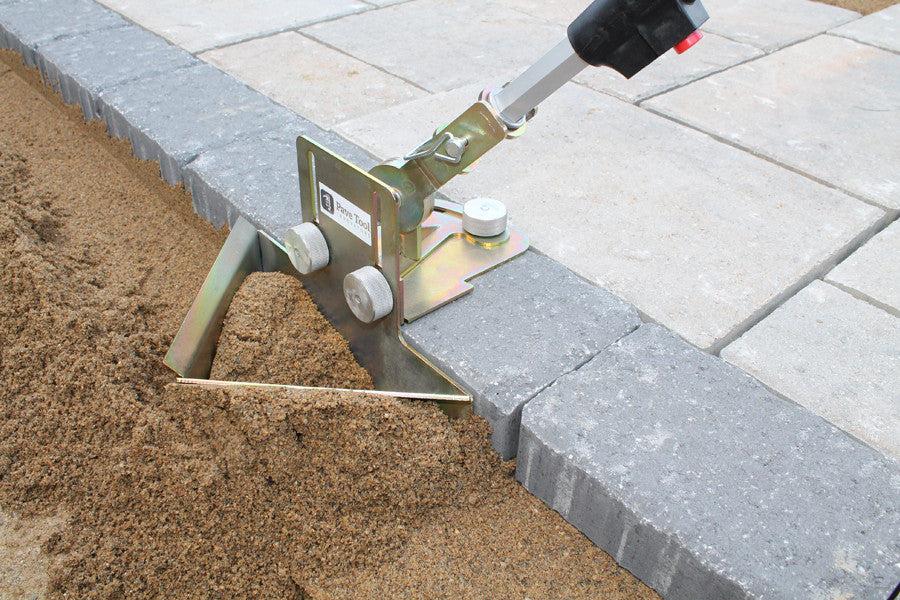
Screed bars are straight metal or aluminum bars used to level sand manually.
Contractors place guide rails or pipes on the sand base and drag the screed bar across them to remove excess material.
Advantages include:
-
Simple operation
-
Low cost
-
Suitable for small projects
Screed bars are commonly used in patio and walkway installations.
Adjustable Sand Screed Systems
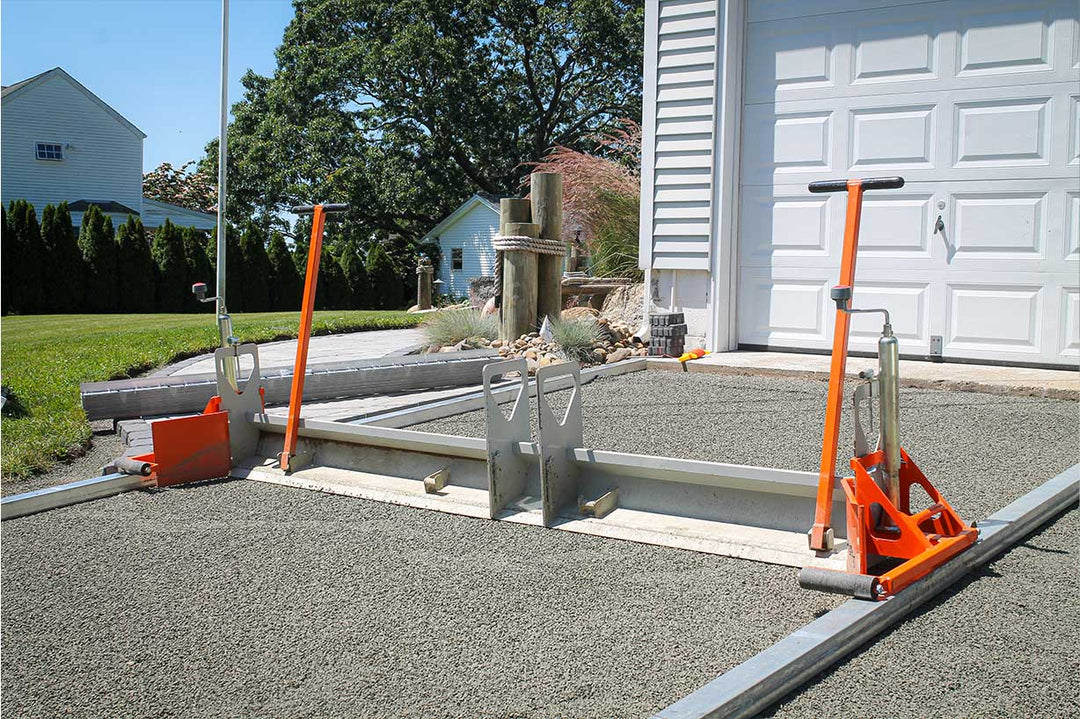
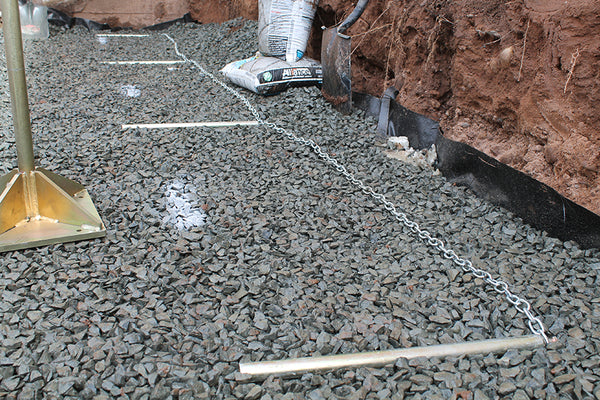
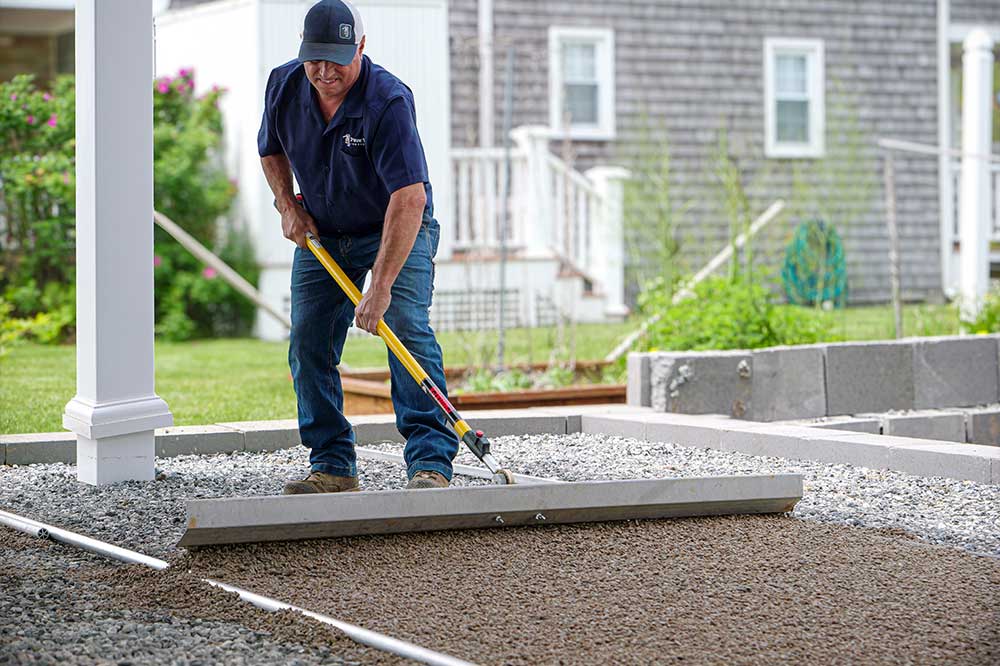
Adjustable screed systems allow contractors to set precise heights for the sand layer.
These systems often include:
-
Adjustable rails
-
Leveling guides
-
Screed bars
Adjustable systems are especially useful for large paving projects because they provide consistent elevation control.
Roller Screed Tools
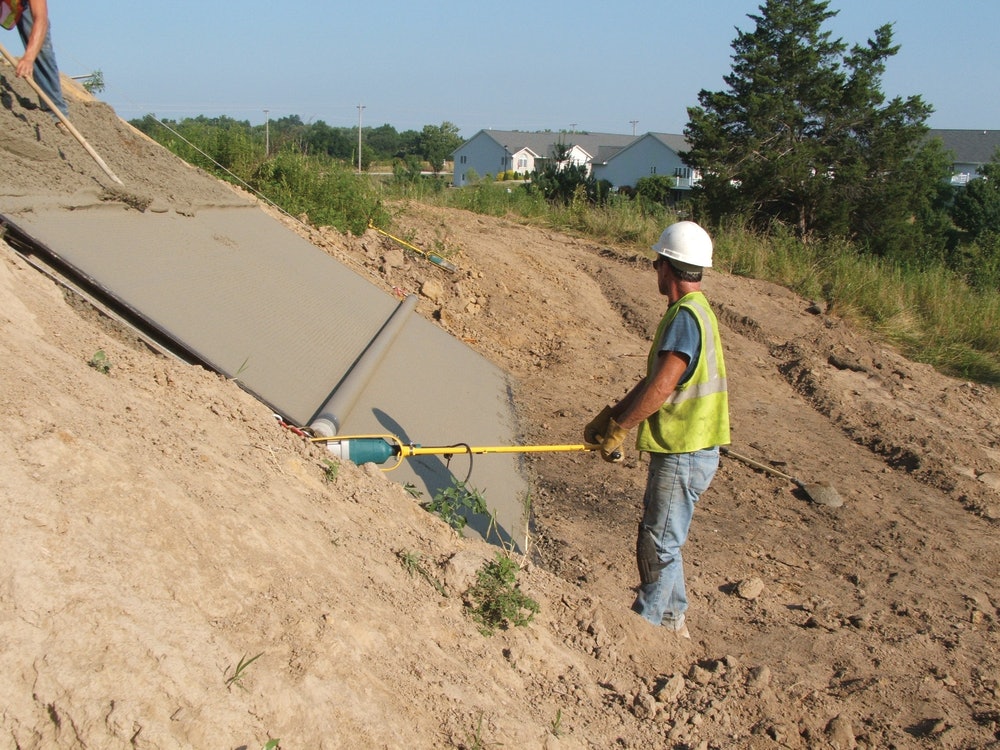
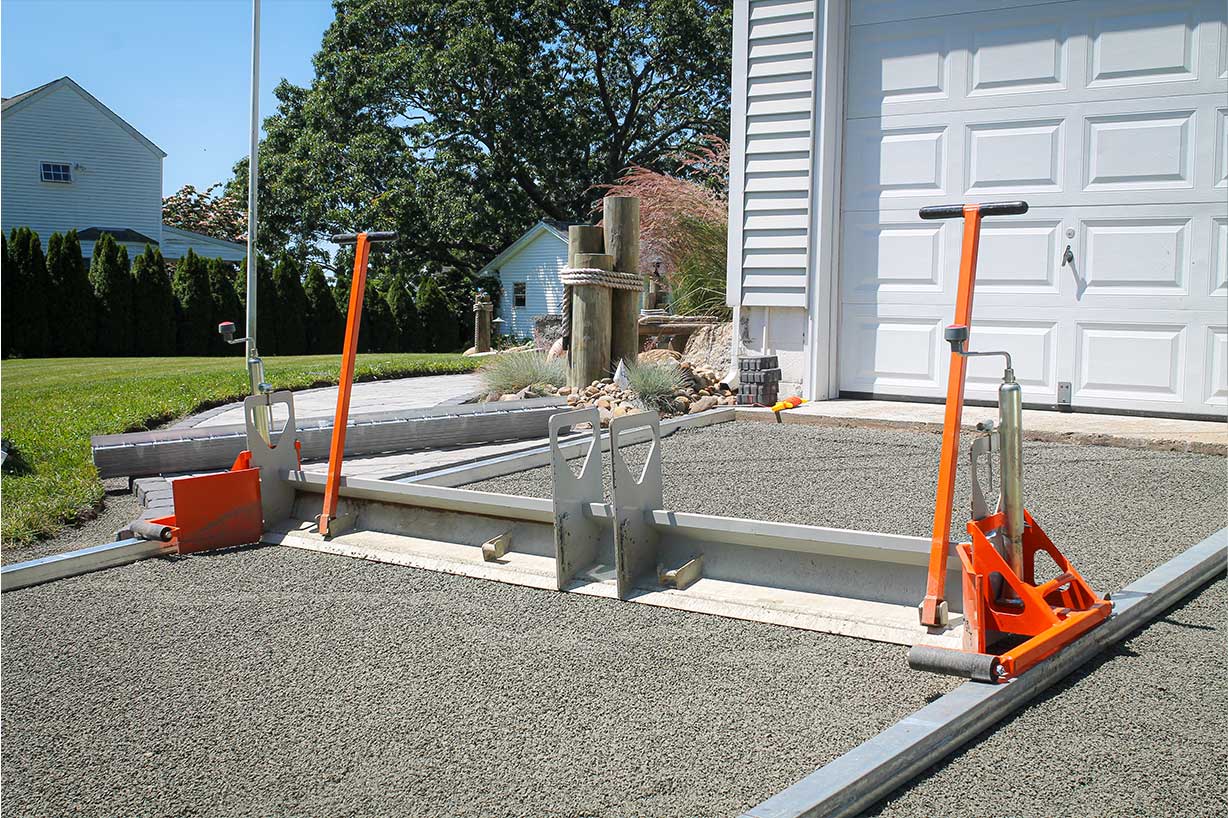
Roller screed tools use cylindrical rollers to level sand as they move across the surface.
Advantages include:
-
Faster leveling
-
Smooth finish
-
Reduced manual effort
These tools are often used for larger installations.
Mechanical Screed Tools
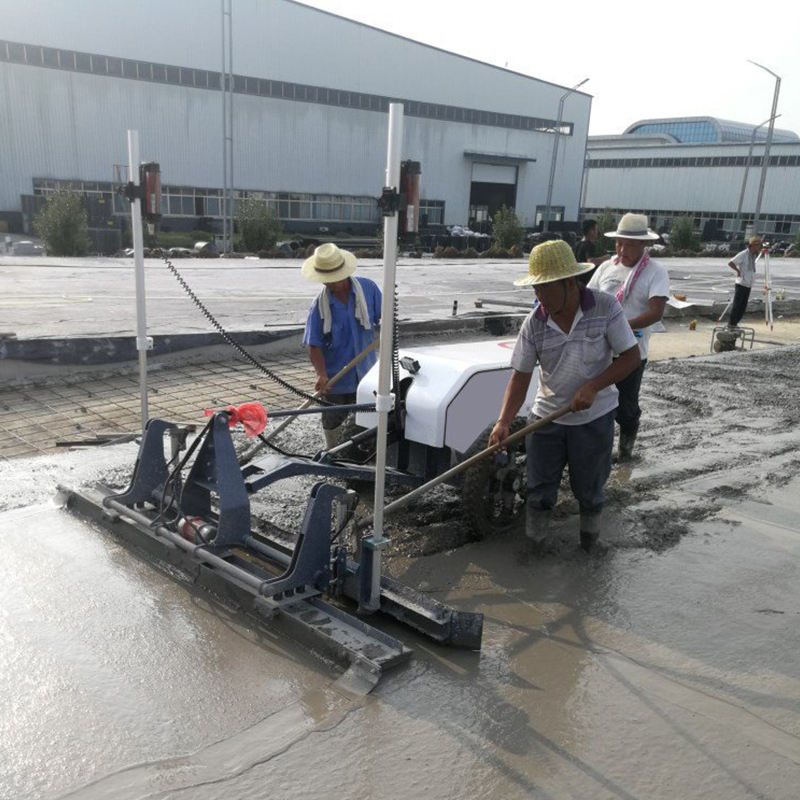
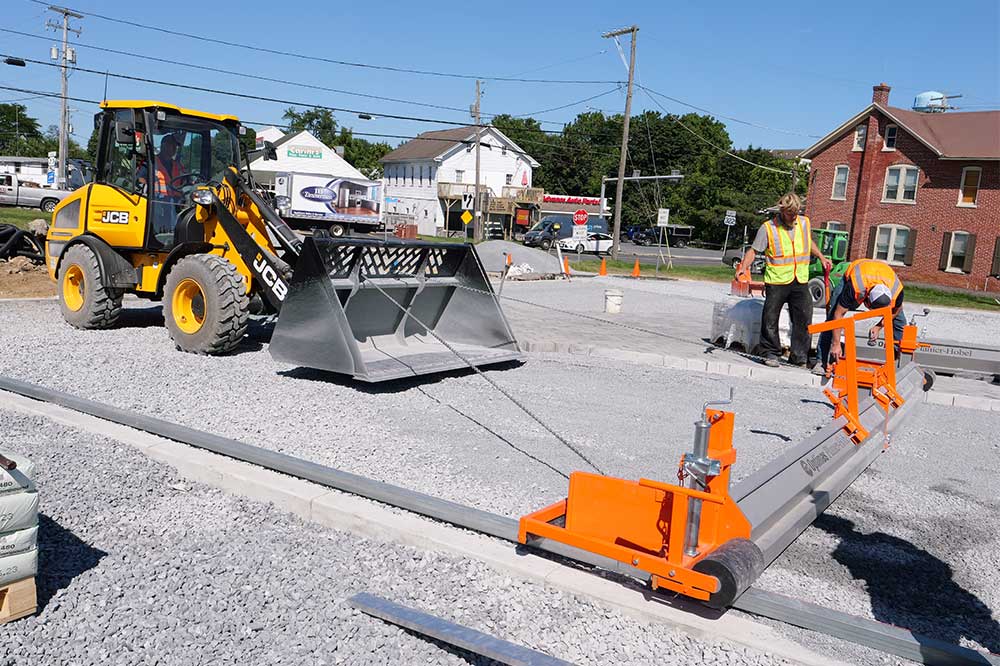
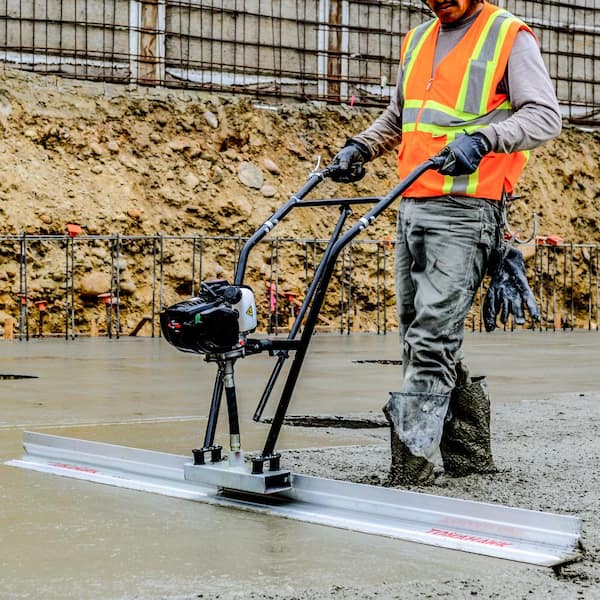
Mechanical screeds are powered machines designed for large-scale construction projects.
These tools can cover large areas quickly while maintaining consistent leveling.
They are commonly used in commercial landscaping and large paving installations.
Materials Used in Sand Screed Tools
Sand screed tools are typically constructed from durable materials to withstand construction environments.
Aluminum
Lightweight and corrosion-resistant, aluminum is widely used for screed bars and rails.
Steel
Steel tools provide durability and strength for heavy-duty applications.
Composite Materials
Some modern screed systems incorporate composite components for improved strength and reduced weight.
High-quality materials ensure long-lasting performance and accurate leveling.
How to Use Sand Screed Tools
Proper technique is essential for achieving professional results.
Step 1: Prepare the Base Layer
Before screeding sand, a stable base of compacted gravel or crushed stone should be installed.
Step 2: Add Bedding Sand
Spread a uniform layer of sand across the prepared base.
Step 3: Install Guide Rails
Place screed rails or pipes at the desired height to control the sand thickness.
Step 4: Drag the Screed Tool
Move the screed tool across the guide rails to remove excess sand and fill low areas.
Step 5: Remove Guides and Fill Gaps
After screeding, remove the rails and fill the voids with sand.
Step 6: Install Pavers
Once the sand is level, pavers or stones can be placed on the prepared surface.
Following these steps ensures a smooth and stable foundation.
Projects That Use Sand Screed Tools
Sand screed tools are used in many construction and landscaping applications.
Paver Patio Installation
Creating a level sand base is essential for patio paver projects.
Walkways and Pathways
Screeding ensures smooth and stable walkways.
Driveways
Proper sand leveling helps prevent paver movement in driveway installations.
Outdoor Flooring
Stone tiles and outdoor flooring systems require a perfectly level sand bed.
Concrete Preparation
Some concrete projects require leveled sand or aggregate layers before pouring.
These tools help contractors achieve consistent results across many project types.
Tips for Achieving Perfect Sand Screeding
Professional contractors follow several best practices when screeding sand.
Maintain Consistent Sand Depth
The sand layer should typically remain within the recommended thickness range for the specific project.
Avoid Walking on Screeded Sand
Walking on leveled sand can create uneven areas.
Work in Small Sections
Screeding smaller sections helps maintain accuracy.
Check Levels Frequently
Using a level ensures proper slope and alignment.
These techniques help maintain a uniform base for installation.
Common Mistakes When Screeding Sand
Avoiding common mistakes can prevent costly repairs.
Uneven Base Preparation
If the base layer is not compacted properly, screeding alone cannot correct the problem.
Excessive Sand Thickness
Too much sand can lead to shifting and instability.
Poor Drainage Planning
Failing to establish proper slope can cause water accumulation.
Skipping Level Checks
Even small deviations can affect the final surface.
Careful preparation and proper technique help avoid these issues.
Frequently Asked Questions About Sand Screed Tools
What is a sand screed tool?
A sand screed tool is used to level sand surfaces for construction and landscaping projects.
Why is screeding sand important?
Screeding creates a flat and stable base for pavers, stones, and other materials.
What tools are used for sand screeding?
Common tools include screed bars, adjustable screed systems, roller screeds, and mechanical screed machines.
How thick should the sand layer be for pavers?
Typical bedding sand thickness ranges between one and two inches depending on the project.
Can sand be screeded without guide rails?
Guide rails help maintain consistent height, though experienced installers sometimes screed without them.
What type of sand is used for screeding?
Concrete sand or bedding sand is commonly used for paver installations.
Do sand screed tools work for gravel?
Screed tools are primarily designed for sand but can sometimes level fine gravel materials.
Is screeding necessary for paver installation?
Yes. Proper screeding ensures a level base and long-lasting installation.
Can beginners use sand screed tools?
Yes. Basic screed bars are simple tools that beginners can learn to use quickly.
What happens if sand is not screeded properly?
Improper screeding can cause uneven pavers, shifting surfaces, and drainage problems.
Why Sand Screed Tools Are Essential for Professional Results
Sand screed tools are indispensable in construction and landscaping projects where a perfectly level surface is required. Whether preparing a patio, installing pavers, or building walkways, screeding ensures that the base layer is consistent, stable, and ready for installation.
By distributing sand evenly and removing excess material, screed tools allow contractors and builders to achieve precise results that improve the durability and appearance of finished surfaces. Proper screeding techniques help prevent settling, maintain alignment, and ensure that projects remain structurally sound for years to come.
For professionals and DIY builders alike, sand screed tools remain one of the most important tools for creating high-quality hardscape installations.