
Circular Saw Blades for Wood
Circular Saw Blades for Wood: Choosing the Right Blade for Clean, Accurate Cuts
Circular saw blades for wood are the foundation of precise, efficient, and professional-quality woodworking. Whether you are framing a house, building cabinets, crafting furniture, or tackling DIY home projects, the blade you choose directly affects cut quality, speed, safety, and finish. Wood varies in density, grain, moisture, and composition, which means no single blade is ideal for every task. Understanding blade design, tooth count, materials, and applications is essential for achieving clean, controlled results.
From rough construction cuts to fine finish work, selecting the correct circular saw blade for wood ensures smoother edges, reduced tear-out, and longer tool life.
What Are Circular Saw Blades for Wood?
Circular saw blades for wood are round cutting tools specifically engineered to cut natural wood and engineered wood products. They mount onto handheld circular saws, table saws, miter saws, and track saws, spinning at high speed to slice through material with precision.
Wood-specific blades are designed to:
-
Cut efficiently along or across the grain
-
Minimize splintering and tear-out
-
Maintain sharpness through repeated use
-
Produce smooth, accurate edges
Using the correct blade transforms a standard saw into a precision cutting tool.
Why Blade Selection Matters When Cutting Wood


Wood is a living material with grain patterns and fibers that react differently depending on cutting direction and blade design. The wrong blade can cause:
-
Excessive splintering
-
Burn marks
-
Slow cutting speed
-
Rough or uneven edges
-
Increased kickback risk
Circular saw blades for wood are engineered to control how fibers are severed, producing predictable and clean results.
Key Components of Circular Saw Blades for Wood
Understanding blade anatomy helps you choose the right tool for the job.
Blade Diameter
Common sizes include:
-
7-1/4 inch (handheld circular saws)
-
10 inch (table saws)
-
12 inch (miter saws)
The diameter determines cutting depth and compatibility with your saw.
Arbor Size
The arbor hole must match your saw’s arbor, commonly 5/8 inch for handheld and table saws.
Tooth Count
Tooth count directly affects cut quality and speed:
-
Fewer teeth = faster, rougher cuts
-
More teeth = slower, smoother cuts
Tooth Geometry
Tooth shape determines how the blade interacts with wood fibers.
Types of Circular Saw Blades for Wood
Rip Cut Blades
Rip cut blades are designed to cut with the grain of the wood.
Characteristics:
-
Low tooth count (typically 18–30 teeth on a 7-1/4 blade)
-
Large gullets for chip removal
-
Fast, aggressive cutting
Best for:
-
Framing lumber
-
Deck boards
-
Rough construction cuts
Crosscut Blades
Crosscut blades are designed to cut across the grain.
Characteristics:
-
Higher tooth count (40–60 teeth)
-
Smaller gullets
-
Cleaner edge finish
Best for:
-
Trim work
-
Cabinet components
-
Plywood and hardwood crosscuts
Combination Blades
Combination blades balance ripping and crosscutting performance.
Characteristics:
-
Medium tooth count (typically 40–50 teeth)
-
Alternating tooth patterns
-
Versatile performance
Best for:
-
General-purpose woodworking
-
Jobsite saws
-
DIY projects
Fine Finish Blades
Fine finish blades are optimized for ultra-smooth cuts.
Characteristics:
-
High tooth count (60–80+ teeth)
-
Thin kerf designs
-
Minimal tear-out
Best for:
-
Furniture making
-
Cabinetry
-
Veneered plywood
Circular Saw Blade Tooth Configurations
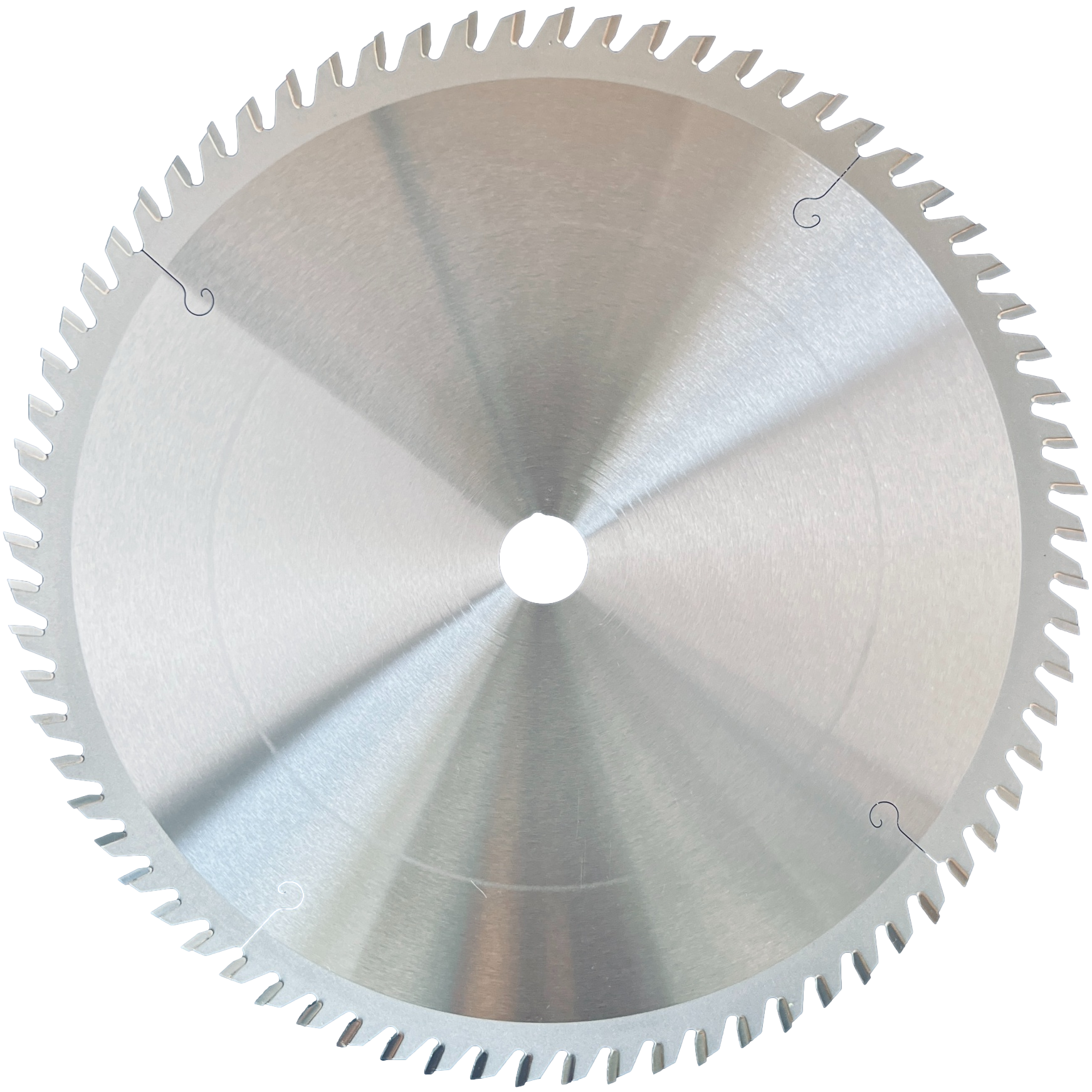
ATB (Alternate Top Bevel)
Most common for wood cutting. Teeth alternate bevel directions for clean shearing.
FTG (Flat Top Grind)
Aggressive, flat teeth ideal for fast ripping cuts.
TCG (Triple Chip Grind)
More common in non-ferrous or composite cutting but sometimes used for engineered wood products.
Wood Types and Blade Selection
Softwood
Pine, fir, and spruce cut easily with most wood blades. Lower tooth counts work well.
Hardwood
Oak, maple, walnut, and cherry benefit from higher tooth counts for smoother edges.
Plywood
Requires blades with more teeth and sharp ATB geometry to reduce splintering.
MDF and Particle Board
Dense and abrasive materials benefit from carbide-tipped blades with fine tooth geometry.
Carbide-Tipped vs Steel Wood Blades
Carbide-Tipped Blades
Most modern circular saw blades for wood use carbide-tipped teeth.
Benefits:
-
Longer lifespan
-
Sharper edges
-
Better heat resistance
-
Cleaner cuts
Steel Blades
Less common today, typically used for rough, disposable applications.
For professional or repeated use, carbide-tipped blades are the clear choice.
Kerf Width and Cutting Performance
Standard Kerf
-
Thicker blade body
-
More stability
-
Requires more power
Thin Kerf
-
Less material removed
-
Requires less power
-
Ideal for cordless saws
Thin kerf blades are popular for portable saws and battery-powered tools.
Applications for Circular Saw Blades for Wood
Framing and Construction
Lower tooth count blades for speed and efficiency.
Finish Carpentry
High-tooth-count blades for clean edges and tight joints.
Cabinetry and Furniture
Fine finish blades for visible surfaces and joinery.
DIY and Home Improvement
Combination blades for versatility across multiple materials.
Leading Manufacturers of Wood Circular Saw Blades
Several manufacturers are known for producing high-quality circular saw blades for wood:
-
Freud – Precision carbide woodworking blades
-
Diablo – Jobsite and finish-grade wood blades
-
DeWalt – Durable construction-focused blades
-
Makita – Fine woodworking blade options
-
Irwin – Reliable general-purpose blades
These brands offer blade options for every skill level and application.
Safety Considerations When Cutting Wood
Proper blade selection improves safety as well as cut quality.
Best practices include:
-
Using sharp, undamaged blades
-
Matching blade RPM rating to saw
-
Allowing the blade to reach full speed
-
Supporting workpieces properly
-
Wearing eye and hearing protection
A dull or incorrect blade increases kickback risk and operator fatigue.
Blade Maintenance and Longevity
Circular saw blades for wood last significantly longer with proper care.
Maintenance tips:
-
Clean resin and pitch buildup
-
Store blades flat or hung
-
Avoid cutting nails or fasteners
-
Have carbide blades professionally sharpened
Routine maintenance preserves cut quality and extends blade life.
Circular Saw Blades for Wood vs Multi-Purpose Blades
While multi-purpose blades can cut wood, they often compromise finish quality.
Wood-specific blade advantages:
-
Cleaner cuts
-
Less tear-out
-
Better chip evacuation
-
Improved surface finish
For woodworking accuracy, dedicated wood blades are always recommended.
Choosing the Right Circular Saw Blade for Wood
When selecting a blade, consider:
-
Type of wood
-
Cutting direction (rip vs crosscut)
-
Desired finish quality
-
Saw type and power
-
Frequency of use
Matching the blade to the task ensures efficiency and professional results.
Circular Saw Blades for Wood FAQs
What blade is best for cutting wood?
A carbide-tipped blade designed specifically for wood delivers the best results.
How many teeth should a wood blade have?
Fewer teeth for fast cuts, more teeth for smoother finishes.
Can one blade cut all types of wood?
Combination blades work well for general use, but specialized blades perform better for specific tasks.
Are thin kerf blades better?
They require less power and are ideal for cordless saws, but standard kerf blades offer more stability.
How do I reduce splintering when cutting wood?
Use a high-tooth-count blade and cut with proper support.
Do plywood cuts require a special blade?
Yes. Fine finish or plywood-specific blades minimize tear-out.
How long do wood saw blades last?
With proper care, carbide blades can last years and be resharpened multiple times.
Can I sharpen circular saw blades for wood?
Yes. Carbide-tipped blades can be professionally sharpened.
Why Choosing the Right Circular Saw Blade for Wood Matters
Circular saw blades for wood define the quality of every cut you make. From rough framing to fine furniture, the right blade improves efficiency, accuracy, and finish while reducing strain on both the tool and the operator. By understanding tooth count, geometry, kerf, and material compatibility, you ensure each project is completed with confidence and precision.
For professionals and serious DIYers alike, investing in the correct circular saw blade for wood is one of the most effective ways to elevate craftsmanship and achieve consistently superior results.